
Are Traditional Mental Health Assessments Missing the Mark? 10 Reasons You Need Culturally Adapted Testing
Mental health assessment is the foundation of effective treatment, yet many traditional approaches fall short of capturing the full picture of a person's psychological well-being. When assessments don't account for cultural context, family dynamics, and diverse ways of expressing mental health symptoms, they can lead to misdiagnosis, inappropriate treatment plans, and missed opportunities for healing.
At Open Heart Communities, we've witnessed firsthand how culturally adapted testing transforms outcomes for individuals and families from diverse backgrounds. Here are 10 compelling reasons why traditional mental health assessments may be missing the mark: and why culturally sensitive alternatives are essential.
1. Subjective Bias Undermines Accuracy
Traditional standardized assessments suffer from inherent subjectivity that leaves significant room for error. Research reveals that approximately 1 million children in the United States are misdiagnosed with ADHD, partly due to the subjective nature of current assessment methods. When cultural factors aren't considered, clinicians may misinterpret behaviors, communication styles, or symptom presentations that are culturally normative as pathological.
Culturally adapted testing recognizes that what appears as "defiance" in one cultural context might be appropriate respect for authority in another, or that direct eye contact expectations vary significantly across cultures.

2. Alarming Inconsistency Across Assessment Tools
Mental health assessment tools demonstrate remarkable inconsistency in what they measure. A comprehensive analysis of 126 different questionnaires and interviews found similarity scores ranging from only 29% for bipolar disorder assessments to 58% for OCD assessments. This means that depending on which tool a clinician selects, a person could receive vastly different diagnoses.
Furthermore, 60% of symptoms were assessed across multiple disorders, showing extensive overlap and poor disorder specificity. This heterogeneity becomes even more problematic when cultural factors aren't integrated into the assessment selection process.
3. Social and Environmental Factors Get Overlooked
Current assessment tools vary dramatically in their evaluation of social, environmental, and situational triggers that contribute to mental health symptoms. Many traditional assessments focus narrowly on individual pathology while failing to capture crucial contextual factors like:
Extended family dynamics and cultural roles
Immigration experiences and acculturation stress
Religious or spiritual frameworks for understanding distress
Community support systems and cultural healing practices
Systemic barriers and discrimination experiences
Culturally adapted assessments recognize that mental health exists within a complex web of social and cultural influences.
4. Resource Intensity Creates Barriers
Formal neuropsychological evaluations can require six to eight hours to complete, making them impractical for regular use or ongoing monitoring. This burden disproportionately affects individuals from marginalized communities who may face additional structural barriers including:
Time constraints due to multiple jobs or caregiving responsibilities
Transportation challenges
Language interpretation needs
Childcare requirements
Culturally adapted, streamlined assessments can maintain accuracy while being more accessible and efficient for diverse populations.

5. Over-Simplified Results Miss the Nuance
Quick screening tools like the Montreal Cognitive Assessment (MoCA) lack detailed domain-specific information about cognition and use overly simple cutoffs that have been questioned by researchers. These tools provide no easily available comparisons with culturally appropriate normative databases, making it difficult to distinguish between cultural differences and clinical concerns.
For example, certain cognitive tasks may favor specific educational backgrounds or cultural problem-solving approaches, leading to false positives in populations for whom the norms weren't established.
6. Poorly Defined Parameters Create Confusion
Critical terms used in mental health assessment such as "engagement," "psychotherapy," "recovery," and intervention "fidelity" are often not well-described in traditional approaches. This vagueness compounds diagnostic and measurement challenges and fails to account for how these concepts might be understood differently across cultural groups.
What constitutes "engagement" in therapy varies significantly across cultures: some value quiet reflection while others emphasize verbal processing. Traditional assessments may pathologize culturally appropriate responses to treatment.
7. Language Barriers Distort Results
Many standardized assessments were developed and normed primarily in English with predominantly white, middle-class populations. Even when translated, linguistic nuances, idioms, and culturally specific expressions of distress can be lost or misinterpreted.
For instance, some cultures have specific terms for emotional states that don't translate directly, or they may express psychological distress through physical symptoms in ways that traditional assessments might miss or misclassify.
8. Limited Long-Term Monitoring Capabilities
Traditional assessments often lack the cultural sensitivity needed for effective long-term progress monitoring. They may not capture improvements that are meaningful within a person's cultural context or may misinterpret cultural practices as symptoms.
Culturally adapted testing provides more relevant benchmarks for tracking progress and can better identify when interventions are truly effective within the person's cultural framework.

9. Historical Trauma and Systemic Oppression Go Unrecognized
Many traditional assessment tools fail to account for the profound impact of historical trauma, systemic oppression, and ongoing discrimination on mental health. These factors are crucial for understanding symptom presentation and treatment planning, particularly for individuals from communities that have experienced:
Historical trauma from colonization, slavery, or genocide
Ongoing systemic racism and discrimination
Immigration-related trauma and family separation
LGBTQ+ discrimination and minority stress
10. Cultural Strengths and Resilience Factors Are Ignored
Perhaps most importantly, traditional assessments often operate from a deficit-based model that focuses exclusively on pathology while ignoring cultural strengths, resilience factors, and indigenous healing practices. This approach misses opportunities to build upon:
Strong family and community support systems
Cultural and spiritual practices that promote healing
Resilience developed through overcoming adversity
Traditional knowledge and coping mechanisms
Culturally adapted testing recognizes and incorporates these strengths as integral components of mental health and treatment planning.
The Path Forward: Embracing Culturally Adapted Testing
Culturally adapted mental health assessments represent a fundamental shift toward more accurate, respectful, and effective evaluation practices. These approaches incorporate cultural worldviews, account for diverse symptom presentations, utilize culturally appropriate norms and comparison groups, and integrate community and family perspectives into the assessment process.
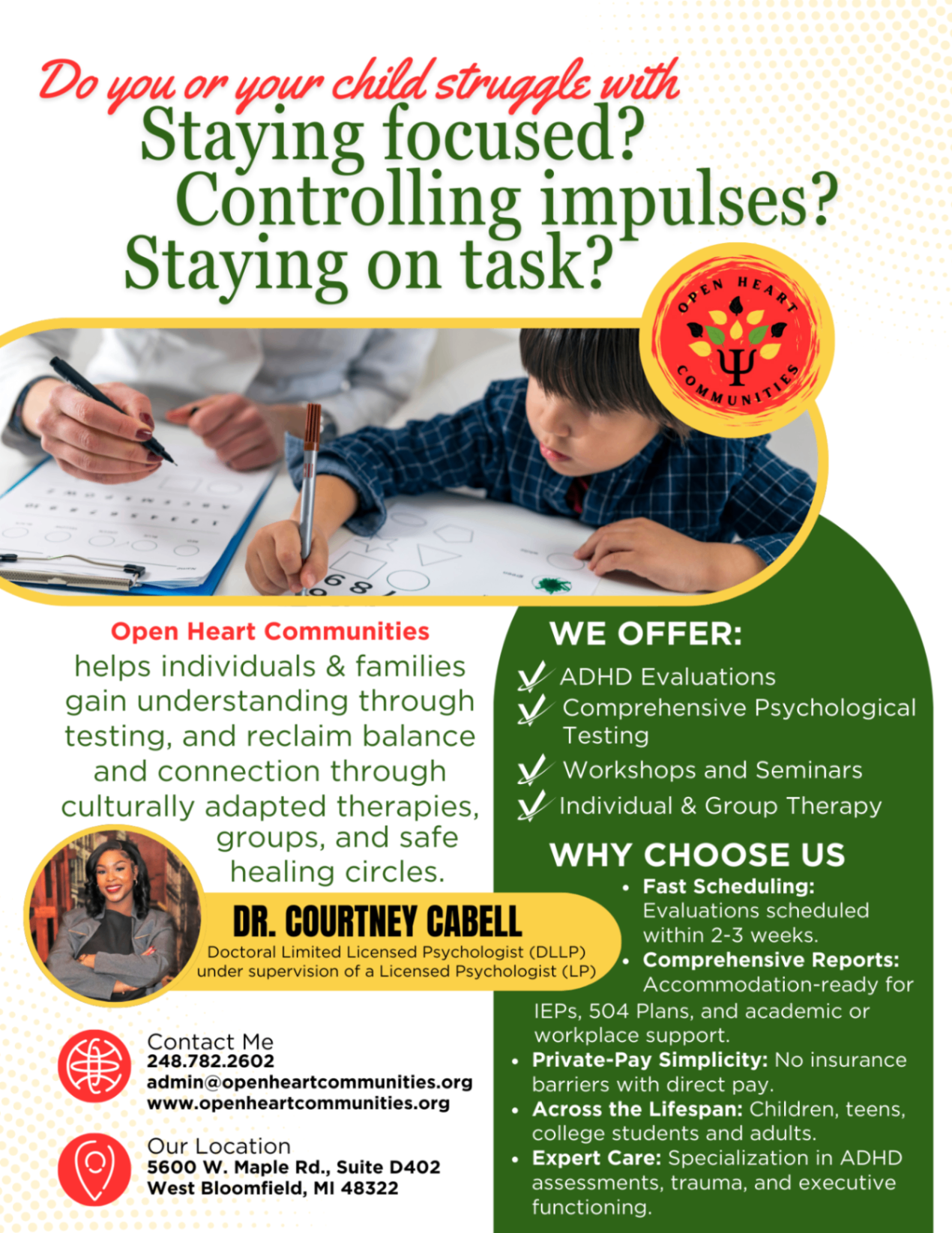
At Open Heart Communities, we're committed to providing culturally responsive psychological testing that honors each individual's unique background and experiences. Our comprehensive assessment services recognize that true healing happens when we understand people within their full cultural context.
Ready to Experience the Difference?
If you've been struggling with mental health concerns that haven't been fully understood or addressed through traditional approaches, culturally adapted testing might provide the clarity you need. Our team specializes in comprehensive psychological assessments that honor diversity, recognize cultural strengths, and provide actionable insights for healing.
Whether you're seeking ADHD evaluation, comprehensive psychological assessment, or support for your family's mental health journey, we're here to walk alongside you with respect, understanding, and expertise.
Ready to take the next step? Contact Open Heart Communities today to learn more about our culturally adapted testing services and discover how proper assessment can open doors to more effective, culturally responsive treatment.
Your cultural background isn't a barrier to overcome: it's a strength to build upon. Let's work together to ensure your mental health assessment truly reflects who you are and supports where you want to go.
Comments